

This project proposal structure has helped me book $50K+ in brand design projects
When I first started my design studio, I thought a brand design project proposal only really needed two things: tell the client what they were getting and tell them how much it cost.
And I mean, technically…yes. But after sending out over 500 brand design project proposals in the past 4 years, booking (a few, lol) of those projects, and refining my process along the way, I realized a strong proposal can do so much more. Last year, the proposal structure I use in my design studio helped me book more than $50K in design projects alone. And while I would never say a proposal alone is what closes a client, I do think the way I present my services has played a major role in turning inquiries into booked projects.
My goal with my project proposal structure is pretty simple: by the time someone reaches the pricing page, they should already understand exactly what we are creating, why it matters, what working together will look like, and what they are investing in.
So, here’s is exactly what I include in a brand design project proposal.
1. A polished, personalized introduction
I treat the proposal as part of the client experience from the very first page. The cover is customized with the client's name, project, date, and imagery relevant to their brand. From there, I include a short introduction to my studio and what we do.
As a brand designer, your proposal is an opportunity to show the level of thought and presentation a client can expect if they hire you. It doesn’t need to be overly elaborate-it just needs to feel considered.
2. A quick introduction to my studio
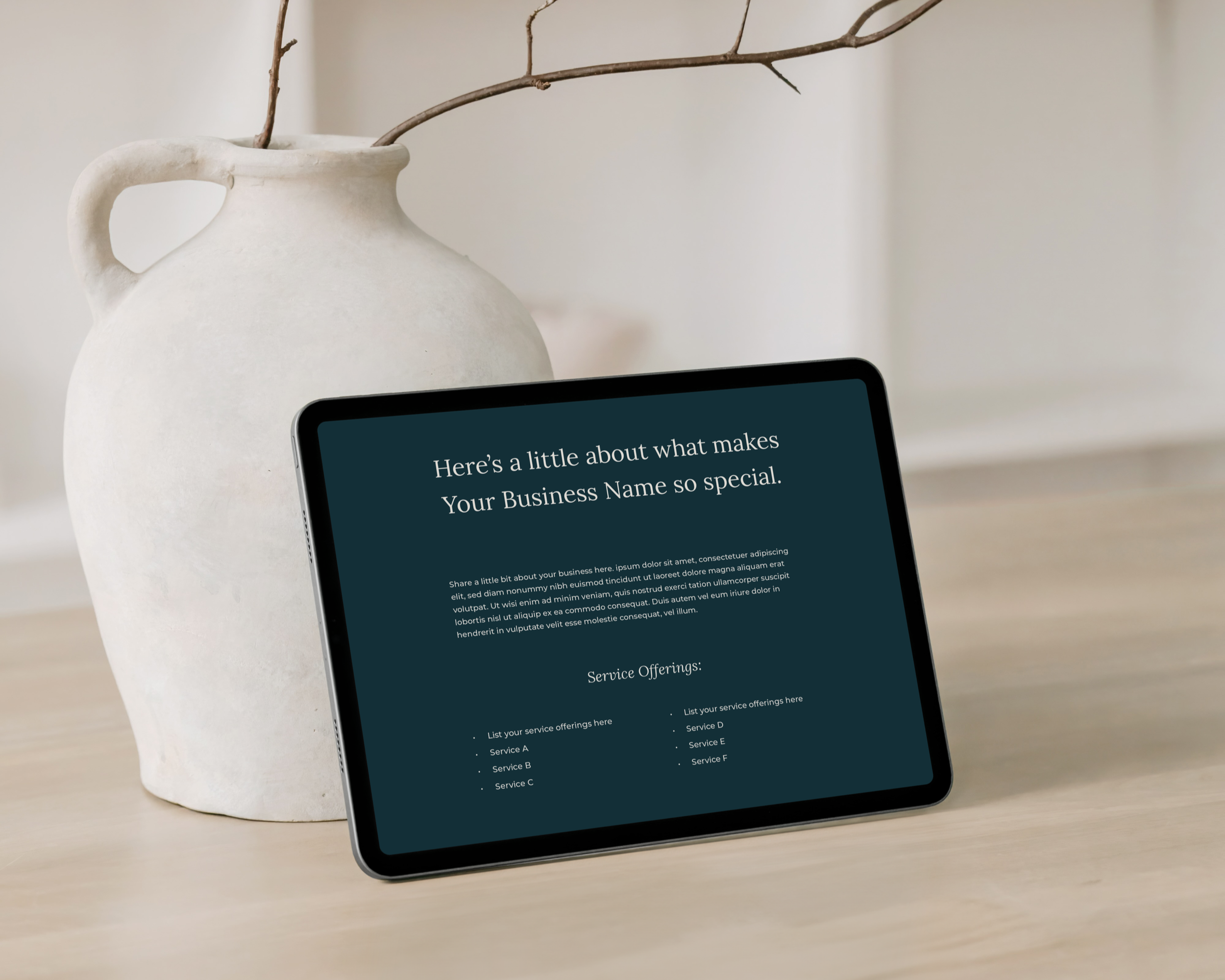
Next, I briefly introduce my studio, explain what we do, and include an overview of our services. And I mean briefly.
Your potential client probably doesn’t need your entire life story here. They need enough information to reinforce that they’re in the right place and that you understand the type of work they’re looking for. I use this page to establish my approach before making the rest of the proposal completely about them.
3. A clear scope of work
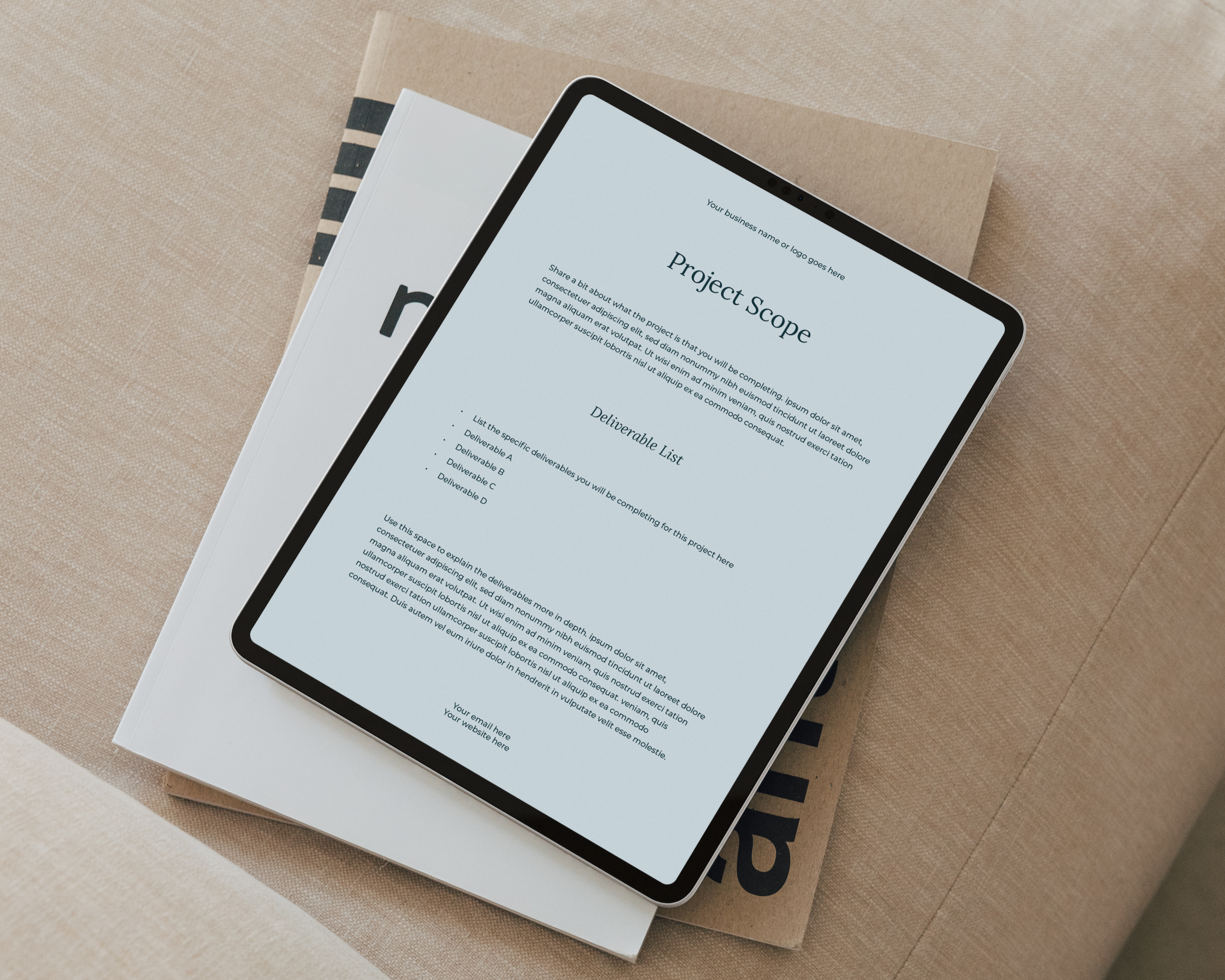
Next, I explain the offer and list exactly what the client will receive. For a brand identity project, that might include strategy, creative direction, a logo suite, brand marks, color palette, typography, guidelines, final files, and a set number of revision rounds.
A good rule of thumb for any project proposal is that clarity here is good for everyone.
By defining a clear scope of work, the client knows exactly what their investment includes, and I have clearly defined the boundaries of the project before we ever begin.
4. The actual process and timeline
Rather than simply saying "this project takes three weeks," I show clients what happens during those three weeks. My timeline walks through strategy and visual direction, the initial design work, revisions, and final file delivery.
I think this is especially valuable for creative services because clients usually only see the finished product. Showing the process gives them a better understanding of the strategy, exploration, refinement, and organization happening behind the scenes. It also reassures them that there is an actual system for getting from Point A to Point B.
5. Straightforward pricing
I don’t hide my pricing or make it complicated. The proposal clearly states the total project investment, payment schedule, and what happens if the scope expands.
But there is a reason pricing comes after everything above.
By the time a potential client sees the number, they’ve already seen the project goal, deliverables, process, and timeline. This means they have context for what they are actually investing in.
6. FAQs + a very clear next step
The final pages answer the little questions that could otherwise create hesitation: How will we communicate? How do payments work? Where will they provide feedback? What platforms will we use?
Then I tell them exactly what happens if they want to book.
For my current process, they respond that they are ready to move forward, I send their contract and invoice, and we select a start date.
What I think actually helps me book clients
There’s a few things about this structure that I think have made the biggest difference:
It feels personalized. The structure is repeatable, but the project goals, scope, imagery, and details are tailored to each client.
It sells the thinking behind the design. I’m not asking someone to pay thousands of dollars for a logo right off the bat. I’m showing them the strategy, process, and larger system behind it.
It removes uncertainty. Clients know what they’re getting, what it costs, how long it takes, how we will work together, and what happens next.
It reflects the experience I am selling. As a brand designer, my own proposal should feel as thoughtful and polished as the work I’m asking someone to hire me to create.
It is detailed without becoming homework. My current proposal is nine pages-it gives clients what they need to make a decision and nothing they don’t.
The biggest change for me was when I stopped treating my proposal like an estimate and started treating it like part of the client experience. Your proposal should help a potential client understand the value of the work, picture what it will be like to work with you, and feel completely clear on what happens next.
And for me, this is the structure that has done exactly that.
